

This week, Thomas Hatch shares pictures and reflections from a recent visit to the Shenzen Education Kindergarten, a public early childhood center in China. This post is the fourth in a series on early childhood education that includes an article describing what Hatch learned about the Sunshine Kindergartens in rural China as well as articles describing approaches to early childhood education in Norway and India.
Last month, in a public kindergarten in Shenzen China, I saw what learning looks like when 300 4-, 5-, and 6-year-olds work on their own and together in over 100 different activities in 20 indoor and outdoor play spaces spread over 3 floors in two buildings.

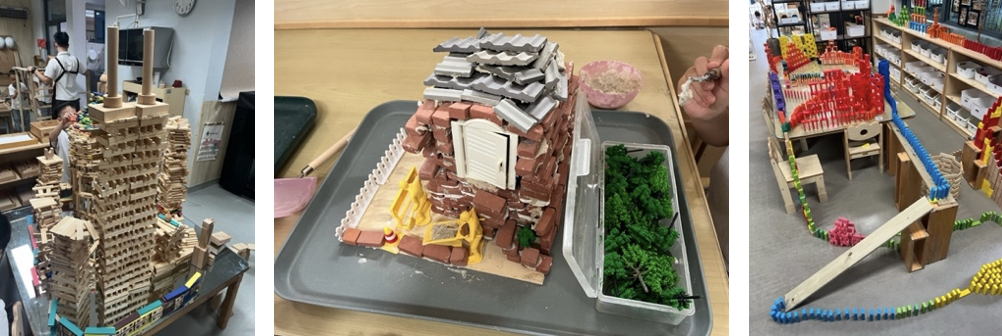
When I walked into the first classroom, a six foot tall tower of blocks greeted me at the door. Spread out beyond that tower, I could see a series of different construction centers the children could work in, each one equipped with metal, wood, Legos, cardboard, bricks, tiles, or another kind of building material.
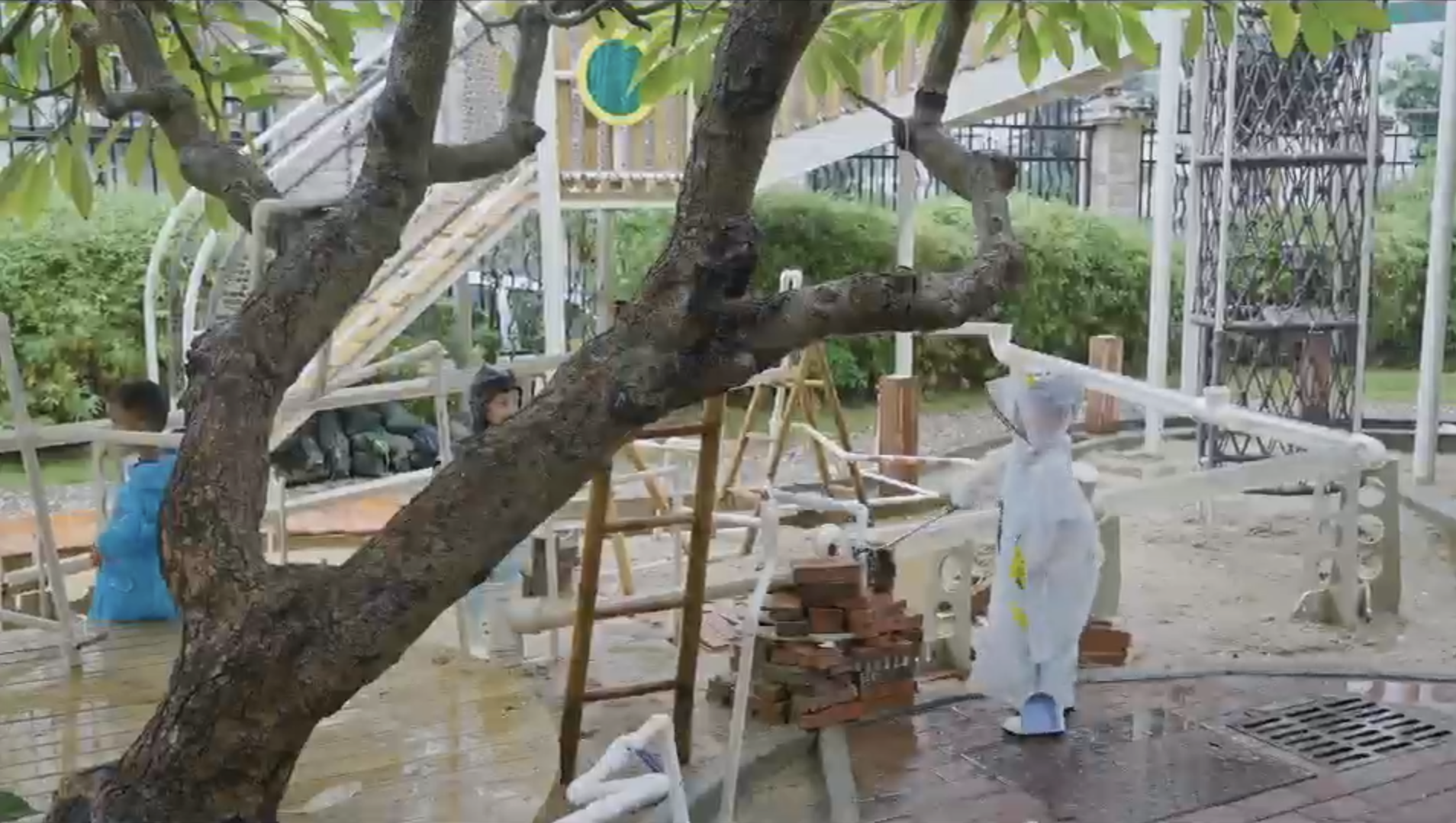
The construction areas continued past an open wall where children in clear plastic slickers pumped water through a series of pipes in the rain.
That one vast room could have housed three or four of the kindergarten classrooms where I used to work, thirty years ago, in Somerville, Massachusetts. At the time, I was studying how the strengths and interests of four 6-year olds evolved over six months during free play. With Howard Gardner and my colleagues at Project Zero, we sought to equip classrooms with a number of different activities that would enable young children to develop a much wider range of abilities than they normally encountered in school.